|
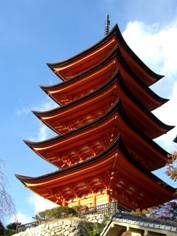
A five-storey pagoda is surely one of the things that ev So, what is the role of a five-storey pagoda in a Buddhist temple? In short, it is a symbol of Buddhism. It is meant to be seen and worshipped from the outside. One is not supposed to climb to the top and appreciate the scenery, as in many modern structures. Although there is a room on the first floor of a pagoda, there isn’t any room to walk around on the upper floors. The space is packed with many wood beams and boards that support the tall structure. 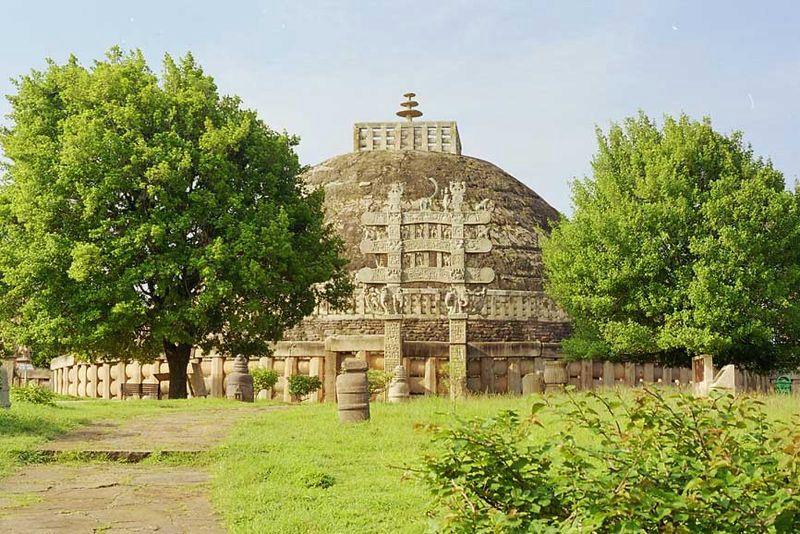
To find the origin of Japan’s pagodas, we must go back to ancient India around the 3rd century B.C., when there were structures called stupas which enshrined relics of the Buddha. They looked like domes with small parasol-like structures on the top, which represent the past, present and future of the Buddha. The forms of stupas changed to Japan’s tower-like ones as they passed to China and Korea and finally came to Japan. “Sorin” which are found on the tops of Japan’s pagodas are remnants of the parasol-like structures. In early times, people were not allowed to make statues of the Buddha, so stupas themselves were the objects of worship. Statues of Buddha began to appear in the late 1st century A.D., and they gradually replaced pagodas as the main objects of worship. As time went by, many temples began to enshrine statues of Buddha or scriptures in stead of ashes of the Buddha inside the towers. |

 oke typical Japanese feelings. In Japan, there are 25 five-storey pagodas and 56 three-storey pagodas which are designated national treasures or important cultural assets of Japan. The oldest wooden pagoda in Japan is the one in